Smart Contracts & Escrow: How Blockchain Builds Trust in RWAs
 Toouk News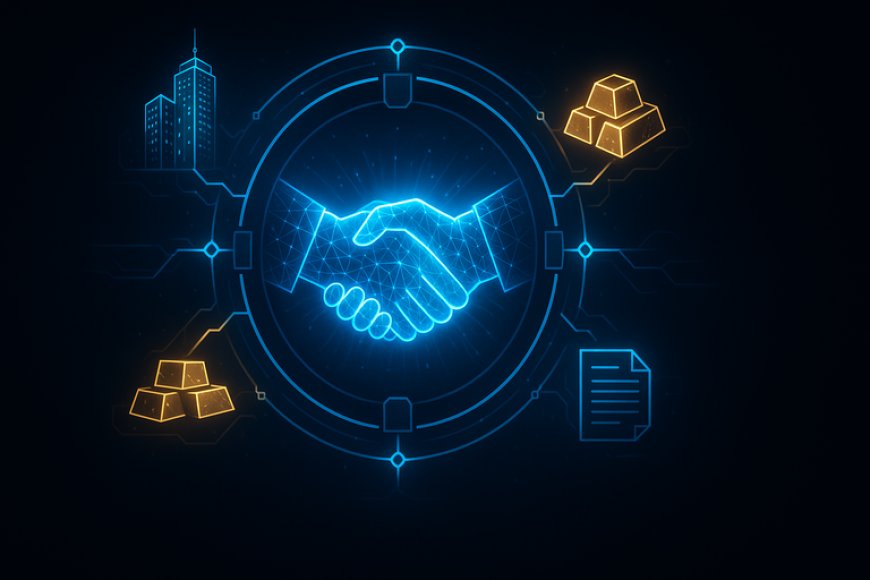
What are smart contracts?
A smart contract is code deployed on a blockchain that automatically runs when predefined conditions are met.
Think of it like a vending machine: you put in the right amount of money, press a button, and the machine delivers the item, no middleman. In tokenization, smart contracts act as that vending machine for ownership, transfers, and income distribution.
How escrow works in tokenization
Escrow is one of the most important uses of smart contracts in RWA tokenization. It ensures neither side can cheat during the transaction.
-
Investor pays into escrow
When an investor commits funds, the smart contract securely holds the money. -
Issuer commits the asset tokens
Tokens representing fractional ownership are locked inside the contract. -
Conditions must be met
Example: the funding goal must be reached, or KYC checks must clear. -
Automatic release
Once conditions are satisfied, the contract automatically transfers tokens to the buyer and funds to the seller. If conditions aren’t met, funds are returned to the investor.
At Toouk Market, every RWA token sale uses escrow-backed settlement to eliminate counterparty risk.
Asset locks & regulatory notifications
Beyond basic escrow, Toouk Market smart contracts add another layer:
-
Asset Locks – Once an asset has been tokenized and sold, ownership is locked under Toouk Marketplace. This prevents unauthorized transfers or misuse.
-
Regulator Notifications – Each lock triggers a notification to relevant regulators, providing oversight and ensuring compliance.
This creates a trust bridge between blockchain efficiency and traditional regulation.
Automated income distribution
Traditionally, distributing income from assets (like rent, dividends, or profits) requires manual bookkeeping and bank transfers. With smart contracts:
-
Income is programmed into the token contract.
-
When rent or profit arrives, the contract splits it proportionally across all token holders.
-
Payments are sent in Toouk Coin directly to investors’ wallets.
This ensures payouts are timely, accurate, and fully auditable on-chain.
Why this matters for investors and issuers
For investors
-
No need to “trust” an intermediary — smart contracts enforce fairness.
-
Income and ownership are transparent on the blockchain.
-
Exit risk is reduced with escrow and asset locks.
For asset owners/issuers
-
Less operational overhead (no manual reconciliations).
-
Compliance is automated (regulator notifications, lockups, eligibility checks).
-
Faster fundraising with more investor confidence.
Toouk Market’s innovation
Unlike many tokenization platforms that only handle issuance, Toouk Market embeds escrow, asset locks, and automated distributions directly into its protocols:
-
STFOA11 & CSSTO11 (Toouk-native protocols) manage fractional ownership and corporate shares with built-in lockups.
-
Escrow contracts ensure funding rounds are fair and regulator-compliant.
-
DAO governance can later extend rules on how distributions or transfers are handled.
The bigger picture
Smart contracts transform RWA tokenization into something reliable, enforceable, and scalable. They replace manual legal and operational work with programmable, auditable code, which is why they are the foundation of Toouk Market’s trust architecture.
As tokenized assets scale into trillions, investors and regulators alike will demand this level of built-in security.